Thermal Master P4 Is a $349 Phone-Connected Thermal Camera That Delivers 256x192 Resolution and Dual-Lens Fusion
Thermal Master P4 phone thermal camera: 256x192 pixel thermal sensor, visible-light dual lens, USB-C for iOS and Android, 25Hz refresh. $349 at Amazon.
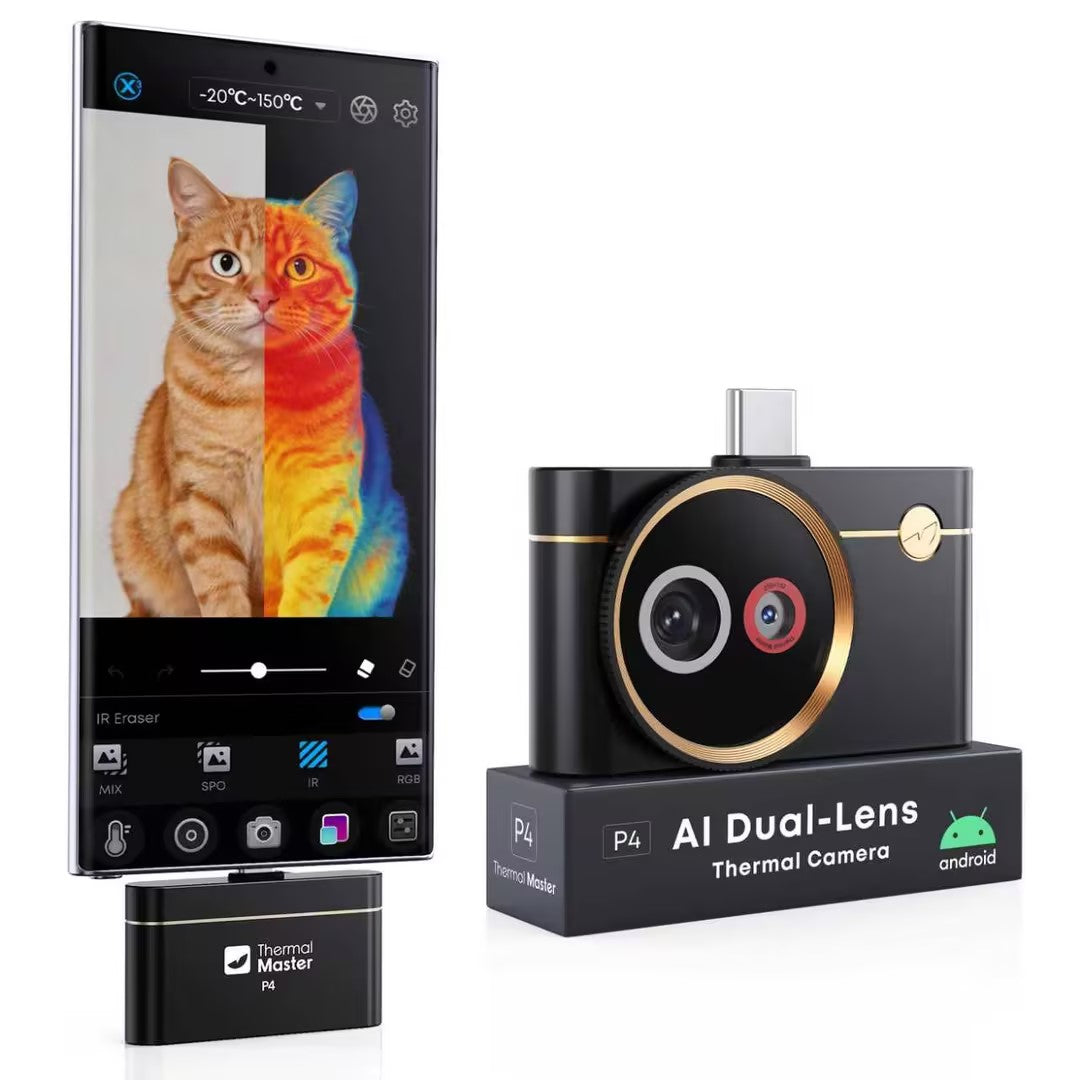
What it is
The Thermal Master P4 is a phone-connected thermal imaging camera that plugs into a USB-C or Lightning port on iOS and Android devices. Core specs: 256 by 192 uncooled microbolometer thermal sensor (49,152 thermal pixels), paired with an 8-megapixel visible-light sensor for dual-lens thermal-plus-visible fusion imaging, 25 Hz thermal refresh rate, -4 to 1,022 degrees Fahrenheit temperature range with 2% accuracy, manual focus on the thermal lens, integrated LED flash for low-light visible imaging, no external battery required (draws 1.2W from the phone), USB-C native with included Lightning adapter for iPhone 14 and older, companion app for iOS and Android with temperature measurement, picture-in-picture thermal+visible overlay, video recording at 25 fps, and real-time temperature spot metering.
Pricing: $349 MSRP at Thermal Master direct, $329 current sale at Amazon.
What's interesting
256 by 192 thermal resolution is the key differentiator at this price. TechRadar's review called it "easily the best phone-connected thermal camera yet." The FLIR One Pro LT at $299 tops at 160 by 120 thermal; the HT-102 at $199 caps at 120 by 90. Thermal Master's 256 by 192 sensor delivers 2x to 4x the thermal detail of most competitors in the under-$500 tier.
Dual-lens fusion (thermal + visible RGB) overlays heat signatures on a clear photograph. Most thermal cameras show only the thermal image, forcing users to switch mentally between "what is the object" and "where is the heat." The Thermal Master P4 displays them together, making hot-spot identification on HVAC systems, electrical panels, and building envelopes dramatically easier.
25 Hz refresh rate supports smooth live-view thermal video (not just still capture). Hackaday's hands-on showed the P4's live-view refresh as fluid enough for moving subject tracking (a running person, a rotating motor, a heating coil warming up).
Phone-draws-1.2W architecture eliminates the external-battery hassle of FLIR and Seek cameras. The P4 slots into the USB-C port, runs off the phone's battery, and stows in a pocket. For professionals doing on-the-job thermal surveys, this is a meaningful workflow improvement.
Temperature accuracy of ±2% at thermometer calibration is within spec for most professional use cases: HVAC diagnostics, building envelope surveys, electrical panel scans, pet care, and automotive cooling diagnostics. Higher-accuracy industrial units (±0.5%) cost $2,000+.
TechRadar specifically highlighted the app's real-time spot-temperature measurement (tap any point, see the exact temperature) as the feature that makes the P4 practical for home inspections and DIY work.
What's missing or unverified
TechRadar's review noted "it's not perfect." Specific flaws: visible light sensor quality is adequate but not great (contrast and dynamic range below what a current-gen iPhone camera delivers), manual focus on the thermal lens can be finicky at close range, and the app can occasionally lose orientation tracking when rotating the phone.
Battery drain on the phone side is real. Continuous thermal video at 25 Hz pulls roughly 2W total (1.2W camera + 0.8W phone processing), which means an iPhone at 50% battery drops roughly 10% per 15 minutes of live thermal use. Field professionals plan for carry battery banks.
Storage is phone-based. Thermal images and videos save to the phone's camera roll; there is no SD card in the camera body itself. This simplifies sync but limits offline use in areas without phone storage.
Companion app has received mixed reviews. Some users report occasional crashes on iOS 17 and 18 when switching between picture-in-picture and fullscreen thermal. Firmware updates have addressed most issues but bugs resurface with major iOS releases.
Against FLIR One Pro LT at $299 (160x120 thermal, established brand, mature app), Seek Thermal Shot at $499 (320x240, higher resolution, no dual-lens), and HT-102 Thermal Camera at $199 (120x90, budget tier), the Thermal Master P4 wins on resolution-per-dollar plus dual-lens fusion; it loses on FLIR brand recognition and Seek's higher top resolution.
Thermal Master as a brand is newer to US market than FLIR or Seek. Warranty is 2 years through Thermal Master direct; Amazon purchases go through Amazon's A-to-Z guarantee.
No weatherproofing rating. Don't get rained on.
Who it's for
HVAC technicians doing home system diagnostics. Home inspectors and energy auditors who need thermal data for client reports. Electricians troubleshooting overheating circuits or load imbalance. Automotive DIY mechanics diagnosing cooling system issues, stuck brakes, or bearing failures. Pet owners and veterinarians tracking infection-related hot spots. Wildlife photographers adding a thermal capability to their mobile kit.
Not for: industrial inspection professionals needing ±0.5% accuracy (step up to FLIR T-series at $2,000+), iPhone-only buyers who find the app rough around the edges, or users who want a standalone thermal camera without phone dependency.
Verdict
The Thermal Master P4 at $329 sale is the right pick for pros and DIYers who want 256x192 thermal resolution plus dual-lens fusion in a phone-pocket form factor. The resolution-per-dollar and dual-lens capability genuinely lead the sub-$500 category. Against FLIR One Pro LT and Seek Thermal Shot, the P4 wins on dual-lens imaging and spec density; it loses on FLIR's app polish and Seek's top resolution. For target home-inspection and HVAC pros, this is the right pick.
This article was written by Dev, ProDrop’s Builder desk. It was fact-checked with a confidence score of 90%.
More in Cameras
DJI Osmo Pocket 4 Adds 240fps 4K, 14 Stops of Dynamic Range, and a Magnetic Gimbal Arm at $499

DJI Lito X1 Is the Best $449 Beginner Drone in 2026, Stepping Up From the Mini 4K With 4K/60 HDR and 40-Min Battery
HeyGen's Avatar V Crosses the Uncanny Valley from a 15-Second Webcam Clip, Beating Google Veo 3.1
ProDrop earns commission from purchases through affiliate links. Read the full disclosure.
Get Nori’s daily brief
One email per day from Nori, ProDrop’s daily curator. Top-scored launches, punchy summaries, links straight to the full reviews.