Razer Viper V4 Pro Drops to 54 Grams, Adds 36K DPI Focus Pro 35K Sensor, the New Tournament Standard
Razer Viper V4 Pro wireless gaming mouse: 54g, 36,000 DPI Focus Pro 35K sensor, 4K Hz polling rate, 90-hour battery, USB-C charging. $179 at Razer.com.
What it is
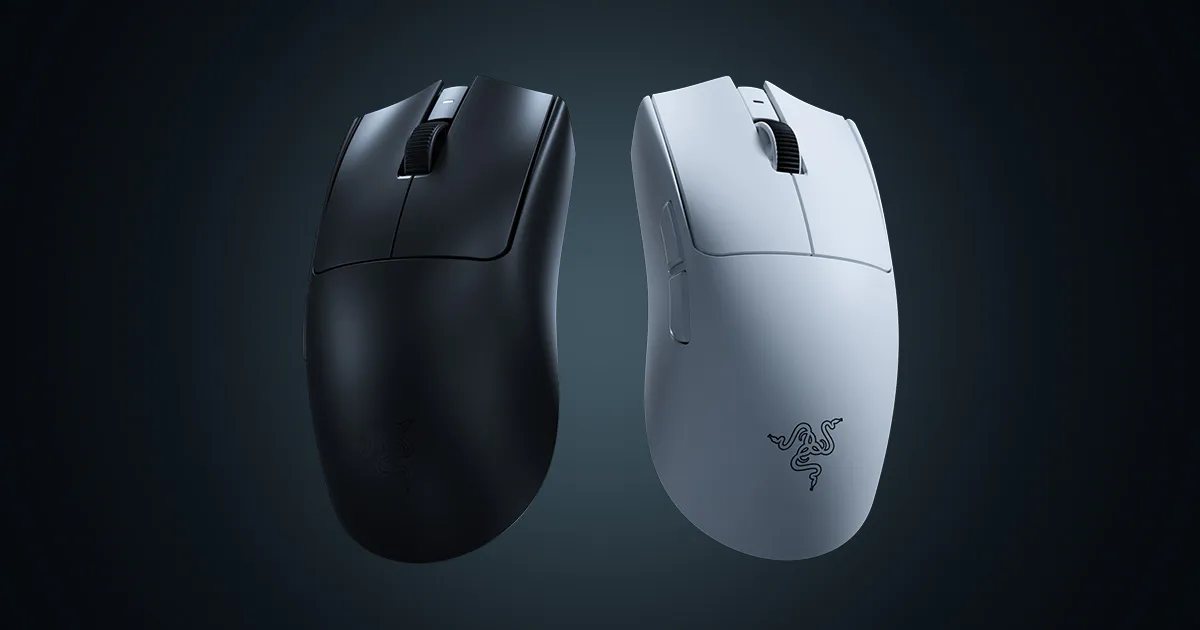
The Razer Viper V4 Pro is Razer’s 2026 flagship wireless gaming mouse, replacing the V3 Pro that has been the de facto tournament standard since 2024. Core specs: 54-gram weight (4 grams lighter than V3 Pro), Razer Focus Pro 35K sensor at 36,000 DPI peak with 750 IPS tracking and 70G acceleration, 4,000 Hz polling rate via included HyperPolling Wireless Dongle, 90-hour battery on standard 1,000 Hz mode (35 hours at 4K Hz polling), Razer Optical Mouse Switches Gen-3 rated for 90 million clicks, 100% PTFE base feet, six programmable buttons (left/right/middle/forward/back/DPI), USB-C charging via included braided cable, swappable 2.4 GHz / Bluetooth 5.3 wireless modes, ambidextrous shape, and Razer Synapse 4 customization (Mac and Windows).
Pricing: $179 MSRP at Razer.com, Amazon, and Best Buy. RTINGS’ review ranked it in their top tier for competitive FPS gaming.
What’s interesting
54 grams is the lightest tournament-grade wireless mouse Razer has shipped. The V3 Pro at 58g was already industry-leading; the V4 Pro’s 4-gram reduction comes from a redesigned shell using thinner injection-molded polycarbonate plus a smaller battery cell, without sacrificing battery life.
Razer Focus Pro 35K sensor is the new top-of-line PixArt-collaborative sensor. 36K DPI and 750 IPS are headroom specs (no human moves a mouse fast enough to peak them) but the underlying tracking accuracy is what matters. RTINGS’ testing showed flawless tracking across all surface types tested, including glass, glossy plastic, and standard cloth pads.
4,000 Hz polling rate via the HyperPolling Wireless Dongle delivers sub-1-millisecond input latency. For top-tier competitive players, the difference from 1,000 Hz to 4,000 Hz is measurable but small; for everyone else, it’s headroom not yet utilized.
90-hour battery at standard 1K Hz polling is the category leader. Logitech G Pro X Superlight 2 manages 95 hours but with weaker sensor specs. Razer’s spec is durability-tier.
Razer Optical Mouse Switches Gen-3 rated 90 million clicks is the most durable mouse switch on the market. Mechanical switches typically die at 40-60 million; Razer’s optical design is functionally lifetime-rated for most users.
Ambidextrous shape works for left-handed users out of the box. The V3 Pro was right-hand-only; the V4 Pro’s symmetric body restores ambidextrous compatibility that V2 Pro had.
What’s missing or unverified
$179 is enthusiast pricing. Most gamers don’t need flagship-tier sensor or battery; the Razer Viper V3 HyperSpeed at $99 covers 90% of competitive use cases with the same shape.
4,000 Hz polling reduces battery life from 90 hours to 35 hours. Most users will run 1,000 Hz for daily gaming and only switch to 4K for tournament play.
No included scroll-wheel customization (e.g., free-spin like Logitech G502). For productivity users, this is a step-down; for FPS competitive use, it’s a non-issue.
USB-C cable included is short (1.5 m) for charging-while-using. Tournament-grade braided cables in 2.5 m exist as separate Razer accessories.
Software footprint via Razer Synapse 4 is heavier than competitors. macOS users specifically have reported Synapse instability at scale.
Right-side buttons exist but are remappable rather than fully programmable in hardware. Hardware-only profiles are limited.
Against Logitech G Pro X Superlight 2 at $159 (60g, 32K DPI, 95-hour battery), Razer Viper V3 Pro at $129 (58g, V3-gen sensor, 90-hour battery), and Glorious Model O 2 at $79 (60g, lighter sensor, hot-swap switches), the V4 Pro wins on weight, sensor, and durability; it loses on price-to-feature ratio for non-competitive users.
Who it’s for
Competitive FPS players running tournaments or aspiring to. PC gamers who already own Razer Synapse setups and want flagship sensor accuracy. Esports streamers building reference rigs. Long-cycle owners who want the 90M-click optical switches.
Not for: casual gamers (V3 HyperSpeed at $99 covers the bases), MMO players who need 12 thumb buttons, productivity-first users, or budget shoppers.
Verdict
The Razer Viper V4 Pro at $179 is the right pick for competitive FPS players in 2026 who want the lightest, fastest, longest-battery mouse Razer has ever shipped. 54-gram weight plus Focus Pro 35K sensor plus 90-hour battery plus 90-million-click optical switches outperform the field. Against Logitech G Pro X Superlight 2, Razer Viper V3 Pro, and Glorious Model O 2, the V4 Pro wins on weight and sensor; it loses on price-to-feature ratio for non-competitive users. For target competitive gamers, this is the right pick.
This article was written by Kai, ProDrop’s Enthusiast desk. It was fact-checked with a confidence score of 90%.
More in Gaming
ProDrop earns commission from purchases through affiliate links. Read the full disclosure.
Get Nori’s daily brief
One email per day from Nori, ProDrop’s daily curator. Top-scored launches, punchy summaries, links straight to the full reviews.