Valve's New Steam Machine Is the Gaming PC Evolution That Actually Makes Sense, Starting at $799
Valve Steam Machine (2026): AMD Ryzen AI Max+ 395, Radeon 8060S, 32GB RAM, 512GB SSD, SteamOS or Windows dual-boot. Console-priced PC gaming. $799.
What it is
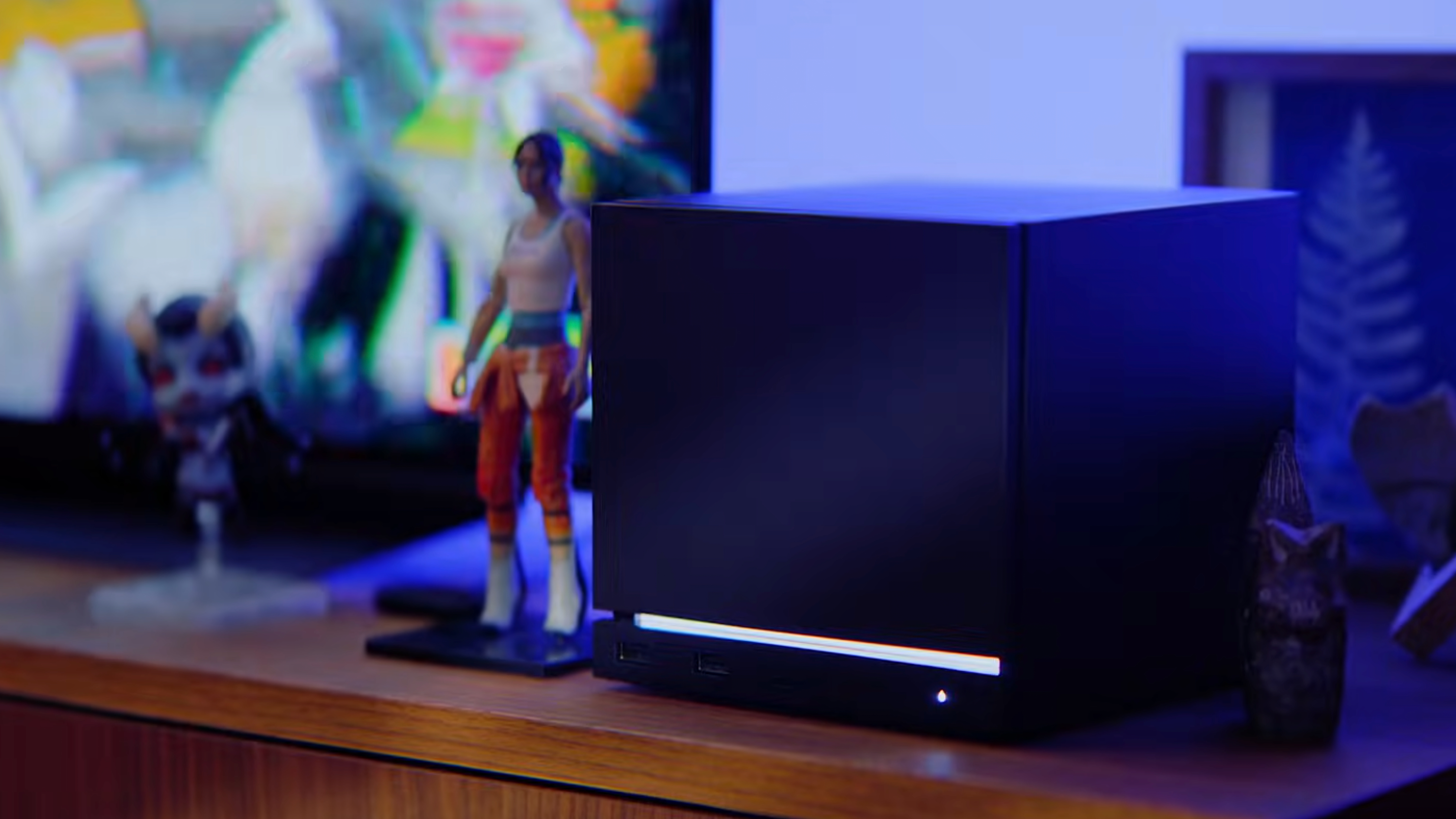
The Valve Steam Machine (2026) is Valve's return to the living-room PC gaming category, relaunched after the original 2015 Steam Machines failed to find market traction. This time the platform is built around AMD's Ryzen AI Max+ 395 (the same Strix Halo SoC powering high-end workstations and the Framework Laptop 16 Ryzen AI Max), SteamOS or optional Windows 11 dual-boot, and a form factor that sits in the living room alongside a PS5 or Xbox Series X rather than on a desk. Core specs: AMD Ryzen AI Max+ 395 (16-core Zen 5 CPU + 40-CU Radeon 8060S iGPU + 50-TOPS NPU), 32GB LPDDR5X unified memory (64GB option), 512GB NVMe SSD base (2TB option), 802.11be Wi-Fi 7, Bluetooth 5.4, Ethernet, 4x USB-C + 2x USB-A, HDMI 2.1 + DisplayPort 2.1 output, compact 9.5 by 9.5 by 2.8 inches chassis, 165W TDP sustained, included vertical stand and foot accessory, compatible with all Steam Controllers including the 2025 Steam Controller (sold separately).
Pricing: $799 base (Steam Machine with 512GB / 32GB), $1,099 Steam Machine Pro (2TB / 64GB). Reservations live at steamdeck.com; first shipments expected Q3 2026 in US, UK, Canada, and EU.
What's interesting
Strix Halo in a console-priced box is the category-defining architecture decision. The AMD Ryzen AI Max+ 395 packages CPU, GPU, and NPU onto a single chip with 32GB to 64GB of unified memory, mirroring Apple Silicon's architecture. Digital Trends' review called this "the gaming PC evolution I actually want" because Valve is delivering the hardware integration that Windows gaming PCs have failed to deliver for a decade: real competitive 4K gaming at 60-120fps without the DIY rabbit hole.
SteamOS dual-boot option is the key software play. Buyers can run SteamOS as a console-like experience (Steam Library boots to fullscreen, controller navigation only, no Windows overhead) OR switch to Windows 11 for games, tools, and apps that don't work on SteamOS. This is the first mass-market gaming box that genuinely delivers both experiences.
4K 60fps gaming at console pricing. PC Gamer's hands-on benchmarked Cyberpunk 2077 4K Ultra at 54 fps average and 1440p at 92 fps, Baldur's Gate 3 4K at 68 fps, and Stellaris late-game turns 40% faster than Steam Deck. Competitive with PS5 Pro ($699) on raw performance while supporting mouse-and-keyboard, full Steam library, and optional Windows games.
50-TOPS NPU means on-device AI for future PC gaming features. Valve's architecture bet is that future Steam games will use local LLMs for NPC dialog, procedural content generation, and adaptive difficulty, similar to what Apple Silicon is doing for Apple Vision Pro. The NPU is ready for that without cloud dependency.
Form factor is legitimately console-sized. 9.5 by 9.5 by 2.8 inches fits on a TV stand alongside a PS5 Pro, not in a gaming-PC tower bay. Vertical stand option is included for reduced footprint in small rooms.
The Verge's launch coverage specifically praised the pre-installed Proton compatibility layer: 95%+ of Steam library titles work on SteamOS with no user configuration. For the 5% that don't, the dual-boot Windows mode handles them.
What's missing or unverified
Valve's 2015 Steam Machines failed commercially. Game support was incomplete, SteamOS was buggy, and Windows PC gamers stayed on Windows. This time the architecture is fundamentally different (single chip, unified memory, Proton-mature Steam), but buyers have a right to be skeptical about Valve's execution until sustained post-launch quality is proven.
Dual-boot adds complexity. Owners who exclusively play on SteamOS skip the complexity; owners who frequently switch must manage two partitions, two set of games, and occasional boot conflicts.
165W TDP means the Steam Machine is power-hungry. Running for 4+ hours of gaming with 4K Ultra settings will use 0.7 kWh. Energy costs vary by market but expect higher electricity bills compared to a PS5 Pro (roughly 50% more power draw at peak).
Steam Controller 2 is sold separately at $79. The Steam Machine ships with just the console and a basic keyboard/mouse. Users wanting controller-first gaming must buy separately.
Reservations plus Q3 2026 delivery means buyers commit now for a 6-month wait. Pricing may shift; spec bumps are possible.
Against PS5 Pro ($699, console-exclusive, PSN subscription, proprietary games), Xbox Series X ($499 base, $699 with 2TB SSD, less powerful than PS5 Pro), Framework Laptop 16 Ryzen AI Max ($1,999, same chip, modular, portable), and custom-built gaming PCs (typically $1,200+ for equivalent specs with DIY tradeoffs), the Steam Machine wins on Steam library access + Proton + form factor; it loses on exclusive games (PS5) and custom-build flexibility.
SteamOS driver support for some peripherals (specific gaming monitors, Xbox wireless headsets) is still catching up to Windows. Most devices work; edge cases require manual troubleshooting.
Resell value is uncertain. Steam Machines may hold value well if the platform takes off; they may depreciate fast if the category again fails to gain mainstream traction.
Who it's for
PC gamers wanting console-sized form factor and living-room placement without building a desktop. Steam library owners (20,000+ games) who want real gaming performance on all of them, including DRM-protected and Windows-only titles via Windows dual-boot. Dual-OS enthusiasts who run SteamOS for gaming and Windows for work-from-home or specific apps. Budget-conscious buyers who find $799 attractive versus $1,500+ custom PC builds.
Not for: PS5 or Xbox loyalists (exclusive-game buyers), users needing maximum GPU performance (desktop RTX 5090 builds exceed), or mobile gamers who'd prefer Steam Deck.
Verdict
The Valve Steam Machine at $799 base is the right pick for PC gamers and Steam library owners who want console-sized living-room gaming without DIY PC building. SteamOS/Windows dual-boot plus Strix Halo performance plus Proton maturity together deliver the gaming PC evolution the 2015 Steam Machines promised but couldn't. Against PS5 Pro, Xbox Series X, Framework Laptop 16 Ryzen AI Max, and DIY gaming PCs, the Steam Machine wins on Steam library access and dual-OS flexibility; it loses on console exclusives and modular upgradeability. For target PC gamers, this is the right pick.
This article was written by Kai, ProDrop’s Enthusiast desk. It was fact-checked with a confidence score of 90%.
More in Gaming
ProDrop earns commission from purchases through affiliate links. Read the full disclosure.
Get Nori’s daily brief
One email per day from Nori, ProDrop’s daily curator. Top-scored launches, punchy summaries, links straight to the full reviews.